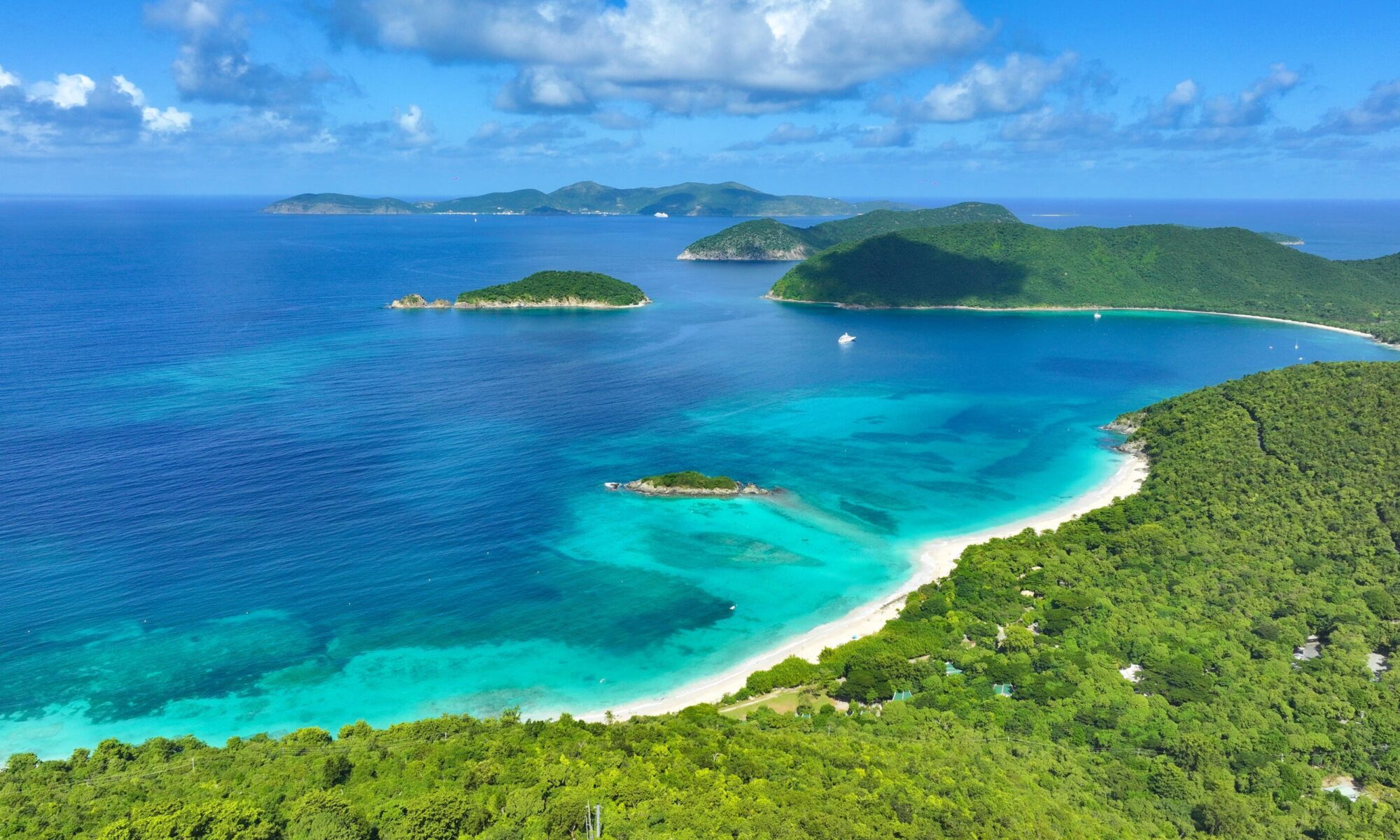
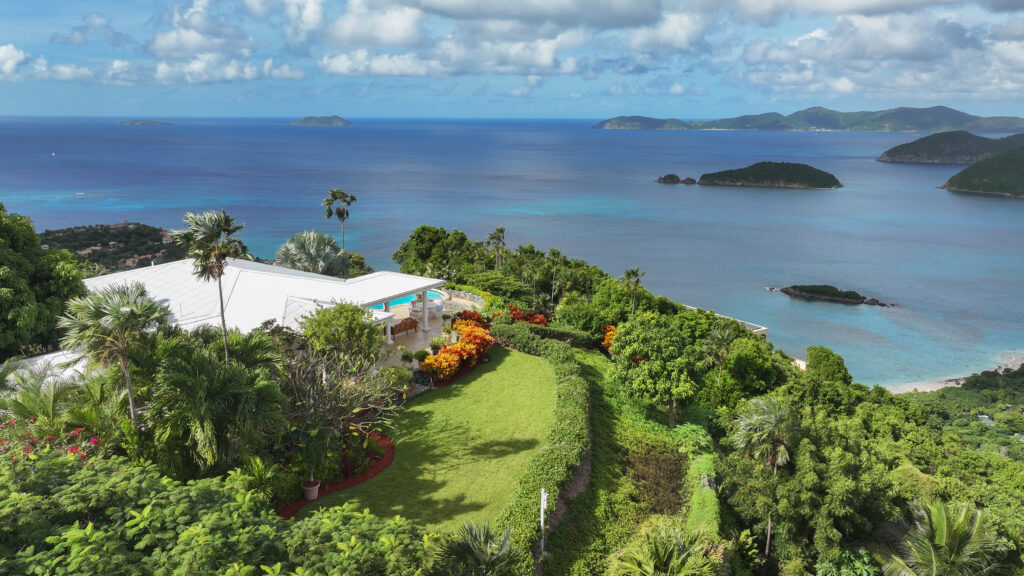
From its commanding elevation in Catherineberg, more than 700 feet above the sea, Pie in the Sky does not simply survey a beautiful landscape—it presides over centuries of Caribbean history.
To the north, the luminous arc of Maho Bay and the shoreline stretching toward Mary’s Point unfold in serene blues and greens. Today, they appear untouched—powdered sand, sea grape trees, and waters where sea turtles drift above seagrass beds. Yet these same shores once supported cotton estates and provision grounds. Mary’s Point, with its 18th-century great house and factory ruins, stands as a quiet testament to plantation life, emancipation, and the resilience of those who shaped the island’s earliest chapters
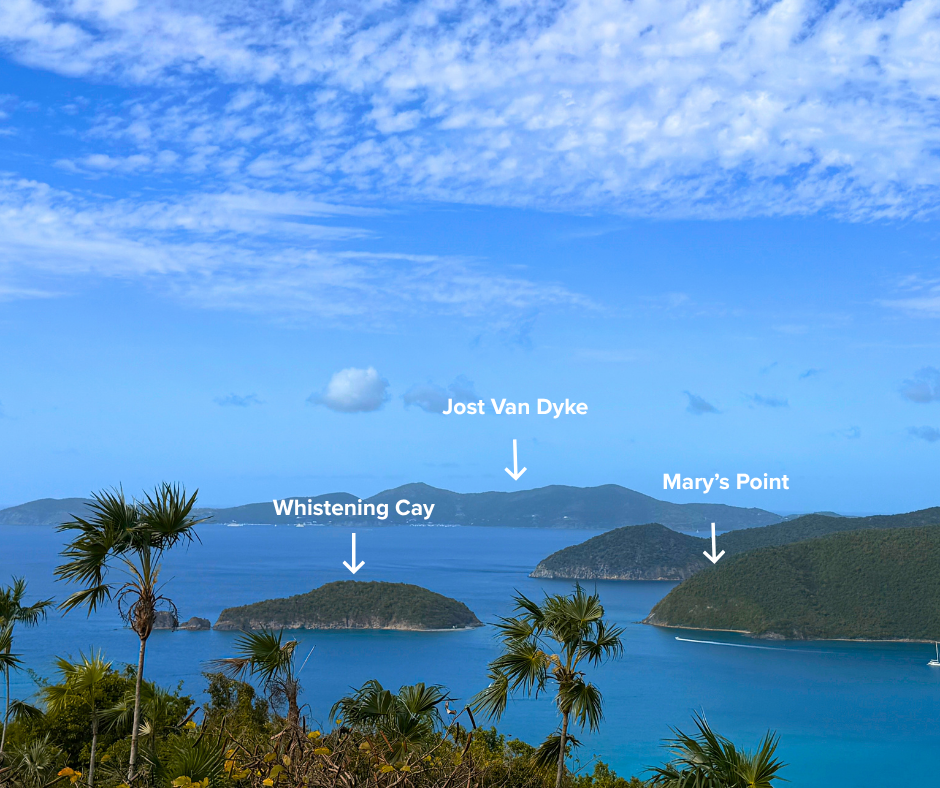
Just offshore rests Whistling Cay, a small granite sentinel that once housed a Danish customs lookout. In the 19th century, guards stationed there scanned the channel between Danish and British waters, monitoring trade—and, at times, human flight toward freedom. From the terraces of Pie in the Sky, that same cay now appears tranquil, folded into the protected embrace of the National Park, yet its cliffs hold stories of vigilance and transition.
Sweep your gaze eastward and the rolling green hills dissolve into the passage toward Jost Van Dyke in the British Virgin Islands—a place once shaped by privateers, sugar cultivation, and maritime trade. On exceptionally clear days, the horizon hints at even more distant silhouettes, reminding the observer that these waters have long connected empires, cultures, and commerce.
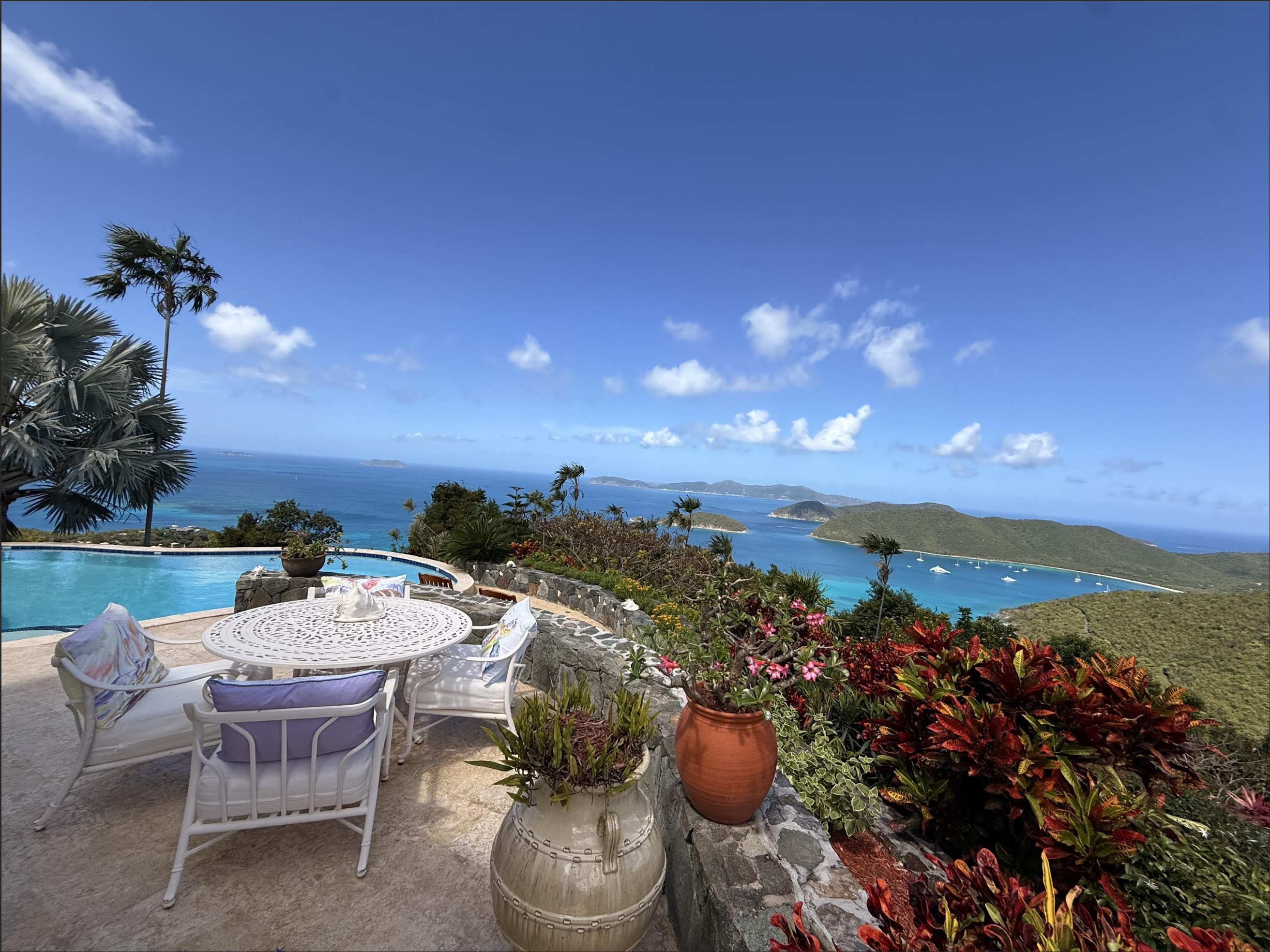
Encircling much of this panorama is Virgin Islands National Park, established in 1956 through the vision of conservationist Laurance Rockefeller. From this estate’s terraces, one looks across land deliberately preserved—over half the island protected from overdevelopment. The sugar mills, stone terraces, and faint plantation roads hidden within the foliage are not relics of a forgotten past; they are carefully safeguarded chapters of a living narrative.
Visible within this protected landscape are the historic ruins of the former L’Esperance plantation estate—weathered stone walls and foundations softened by time yet unmistakable in form. Once a working 18th-century sugar plantation, L’Esperance stands as a tangible reminder that this island’s beauty has always carried layered narratives of labor, endurance, emancipation, and renewal. From Pie in the Sky, these remnants are not hidden deep in forest—they are part of the living horizon, quietly anchoring the view in truth.
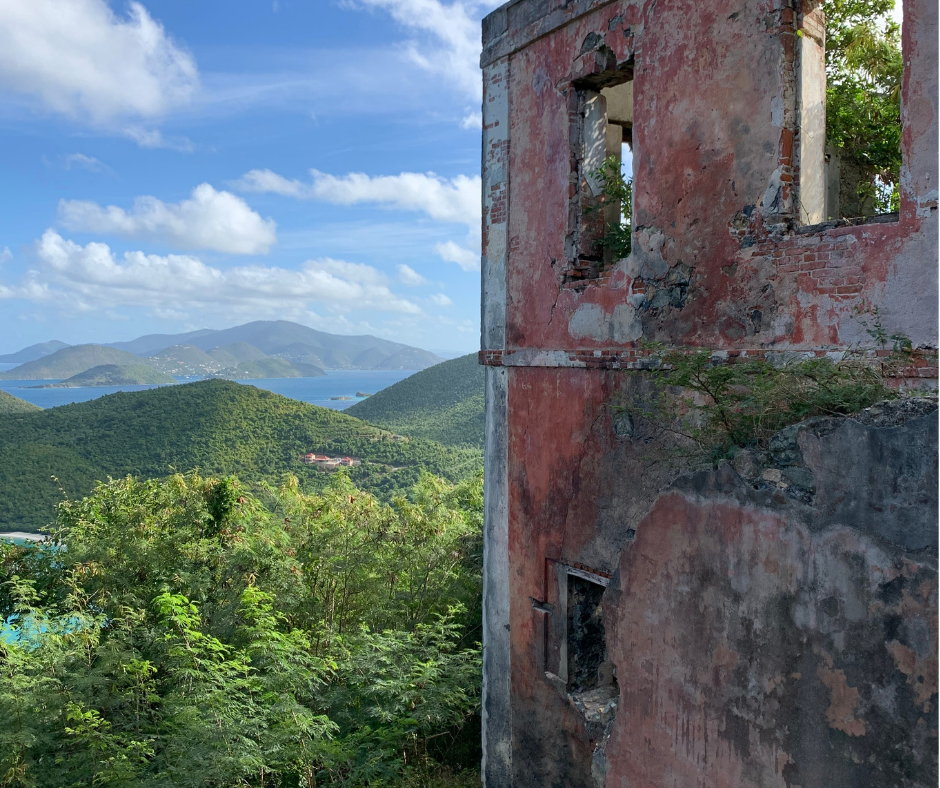
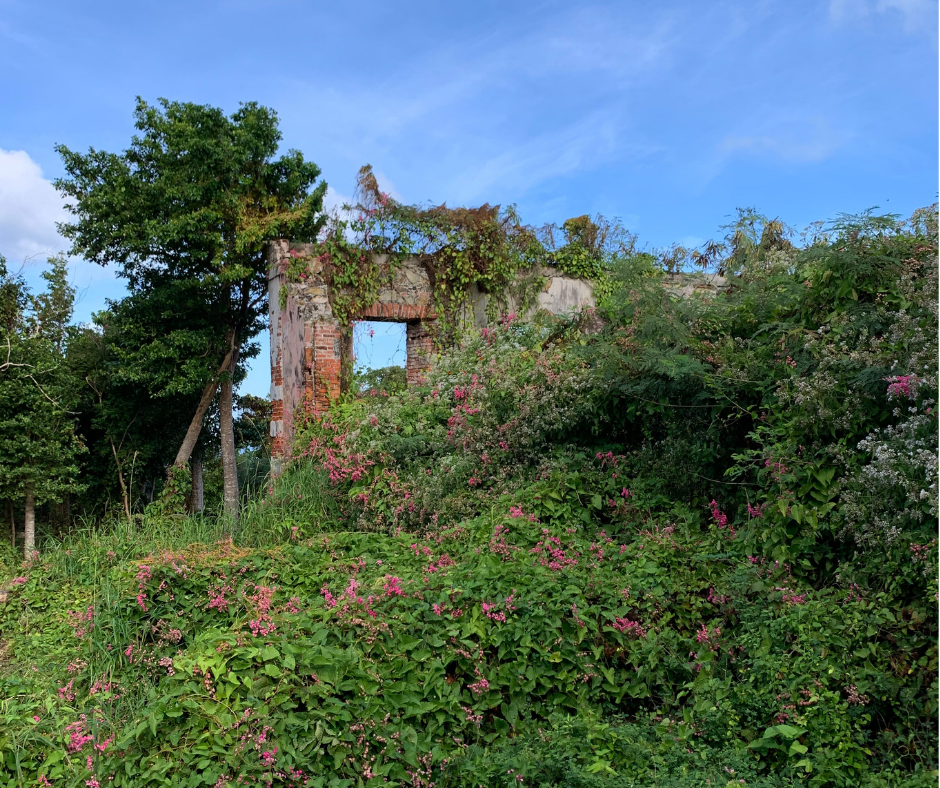
It is within this historical amphitheater that Pie in the Sky was conceived. The estate’s manicured lawns, mango terrace, and half-mile of stone pathways feel almost in dialogue with the old Danish roads that once traced similar contours across the hills. The main residence and guest cottage, with their timeless Caribbean lines and modern comforts, offer refuge—yet they stand on land that has witnessed centuries of transformation.
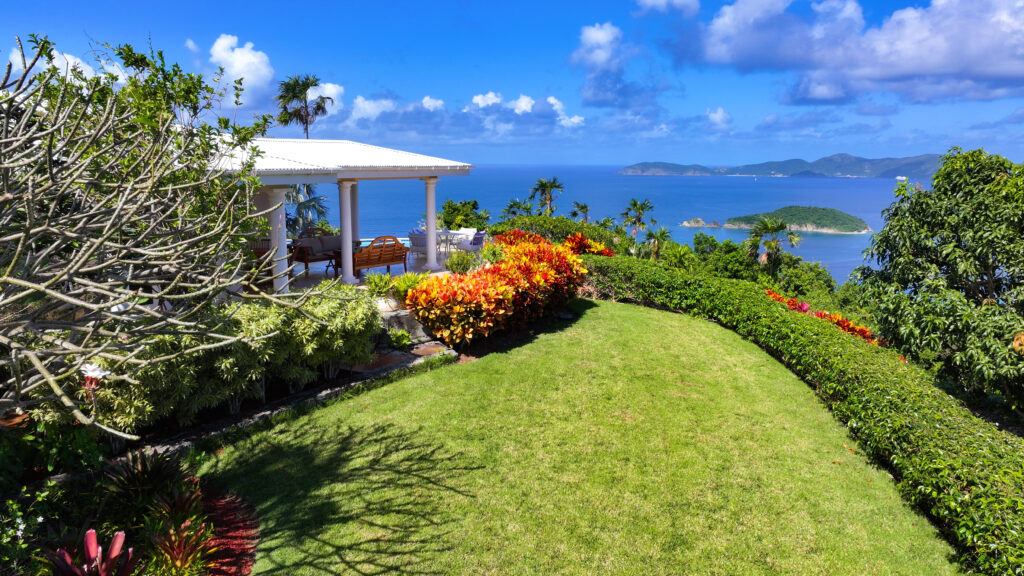
Catherineberg itself has long been associated with elevated perspective—geographically and socially. Its altitude captures cooling trade winds and expansive views, but it also invites contemplation. From here, sunrise over the North Shore feels ceremonial; evening light settling across the cays carries a quiet gravitas. This is not merely a touristic vantage point. It is a seat within history.
To reside at Pie in the Sky is to live amid a layered tableau: pre-Columbian footsteps, Danish colonial ambition, emancipation, conservation, and modern stewardship. The estate’s privacy and refinement offer sanctuary, yet beyond its gates stretches a protected landscape that ensures these views—and the stories they hold—remain largely unchanged.
In Catherineberg, luxury is not only measured in acreage, architecture, or amenities. It is measured in perspective. And from this rare elevation, St. John reveals itself not simply as paradise, but as a profound and enduring testament to heritage, resilience, and preservation.
The information on this website is provided exclusively for consumers' personal, non-commercial use and may not be used for any purpose other than to identify prospective properties consumers may be interested in purchasing. Equal Housing Opportunity: All real estate advertised herein is subject to the Fair Housing Act of 1968.
POPULAR SEARCHES
Island Sky Condos Waterfront Properties New Listings Luxury Listings Commercial Properties Condos for Sale St. John, USVI Sitemap Rendezvous & Ditleff Point The Hills Condominiums Virgin Grand EstatesST. JOHN AREAS
Peter Bay Cruz Bay Coral Bay Chocolate Hole The Hills Condominiums Ditleff Point Virgin Grand Estates Fish Bay and Reef Bay Rendezvous & Ditleff Point Catherineberg St. JohnThe Marketplace
St. John, VI 00830
O: 340.776.6776 F: 340.774.8042
List Your Property | About Our Company | Our Agents | Explore | Blog | Contact Us
© 2026 Holiday Homes of St. John, LLC, All Rights Reserved. Powered by Neutrino, Inc.Privacy Policy
Terms and Conditions
Sign In
Sign in with Facebook Sign in with GoogleCreate an account
Create an Account
Sign up with Facebook Sign up with GoogleAlready have an account? Sign in.
By joining you agree to our Terms of Use and Privacy Policy
International Partners