
Few places let you own a piece of the Caribbean the way St. John does. Roughly 70% of the island is protected as Virgin Islands National Park, so the beaches, forested hillsides, and harbor views that draw visitors are not going to be built over. Add an established luxury villa rental market and you have a rare mix: a home you can enjoy, and one that can help pay for itself.
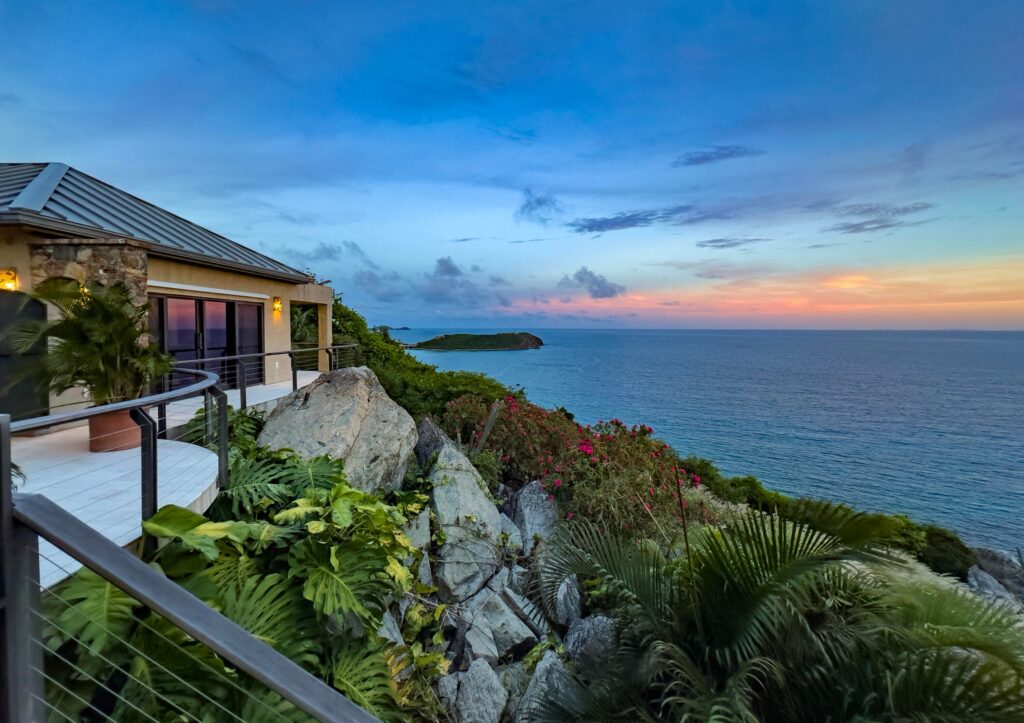
But the gap between a beautiful second home and a well-performing investment is made before you buy, and widened or narrowed by how the property is managed afterward. This guide covers how to choose the right property, build a realistic financial model, manage the home, and prepare for the risks specific to island ownership.
Why Invest in a Vacation Home on St. John, USVI?
St. John combines the appeal of a tropical destination with the familiarity of a U.S. territory, and its protected land places real limits on future development. Protection doesn’t guarantee appreciation, but limited supply can support the long-term appeal of well-located property.
For investors, the main advantages are:
A distinctive destination: Beaches, snorkeling, hiking, and a relaxed island atmosphere draw travelers throughout the year.
Limited property supply: Geography and conservation constrain development, especially in sought-after locations.
An established villa rental market: Families, couples, and groups choose private villas for the space and privacy hotels can’t match.
Flexible personal use: Stay when you like, rent when you don’t.
Long-term ownership potential: A well-maintained home in a desirable location may hold buyer interest over time, though future appreciation is never assured.
The real question isn’t whether St. John is a desirable place to own. It’s whether a particular property, at its price and with its operating costs, meets your objectives.
Choose a Property That Performs as Well as It Looks
Views and architecture sell homes. Guest appeal, practical operation, and a defensible financial model make them investments.
Location
Location drives nightly rates, guest convenience, maintenance logistics, and the type of traveler you attract.
Cruz Bay: Walkable or short-drive access to restaurants, boutiques, and the ferry. Appeals to guests who want to minimize driving.
Chocolate Hole: A residential setting with ocean-view villas, close to Cruz Bay yet private.
Coral Bay: A quieter, more independent feel on the island’s east side, suited to guests who prioritize seclusion.
Other neighborhoods can be equally compelling. Evaluate access, road conditions, beach proximity, and views, not just distance from a landmark. A secluded villa can command a premium when its setting is exceptional, but remoteness can add maintenance logistics and complicate guest transportation. The right choice depends on who the property is meant to attract.
Features That Influence Rental Appeal
Prioritize features that measurably improve the guest experience at your price point:
Ocean views and outdoor living: Shaded terraces, outdoor dining, and a pool make the most of the climate.
Bedroom and bathroom configuration: Layouts that suit families or small groups reach a wider market.
Air conditioning and reliable Wi-Fi: Essential for comfort, remote work, and longer stays.
A well-equipped kitchen: Villa guests value cooking and dining at home.
Privacy and thoughtful design: Quality furnishings and well-planned common areas set a home apart.
Resilient infrastructure: Water storage, backup power, storm protection, and durable construction reduce disruption and surprise costs.
Build a Realistic Financial Model Before You Buy
Published nightly rates and market averages give context, but they’re no substitute for property-specific evidence. Two villas with the same bedroom count can perform very differently because of location, condition, views, management, reviews, and seasonal availability.
How to Estimate Rental Income
Start with actual booking and financial records from comparable homes, ideally covering the past 12 to 24 months. Match on location, bedroom count, amenities, condition, and guest capacity. Track three measures:
Average daily rate (ADR): The average nightly rate for occupied nights. Treat taxes and fees consistently.
Occupancy rate: The share of available nights booked. Confirm whether the source measures against the full year or only nights offered for rent.
Gross rental revenue: Booking income before operating expenses, management fees, taxes, and other costs.
For initial planning, model several occupancy scenarios (for example 55%, 60%, and 65%) against a range of nightly rates. These are planning assumptions, not forecasts for any individual property.
Example: A villa averaging $800 per night at 60% annual occupancy would gross about $175,200 over a full year (assuming all 365 nights are available).
That is not profit. It doesn’t account for owner stays, cancellations, discounts, platform fees, cleaning, management, insurance, maintenance, taxes, or capital expenditures.
The Full Cost of Ownership
Materials and furnishings may need to be shipped, contractors can be scarce, and tropical weather demands preparation and reserves. Budget for:
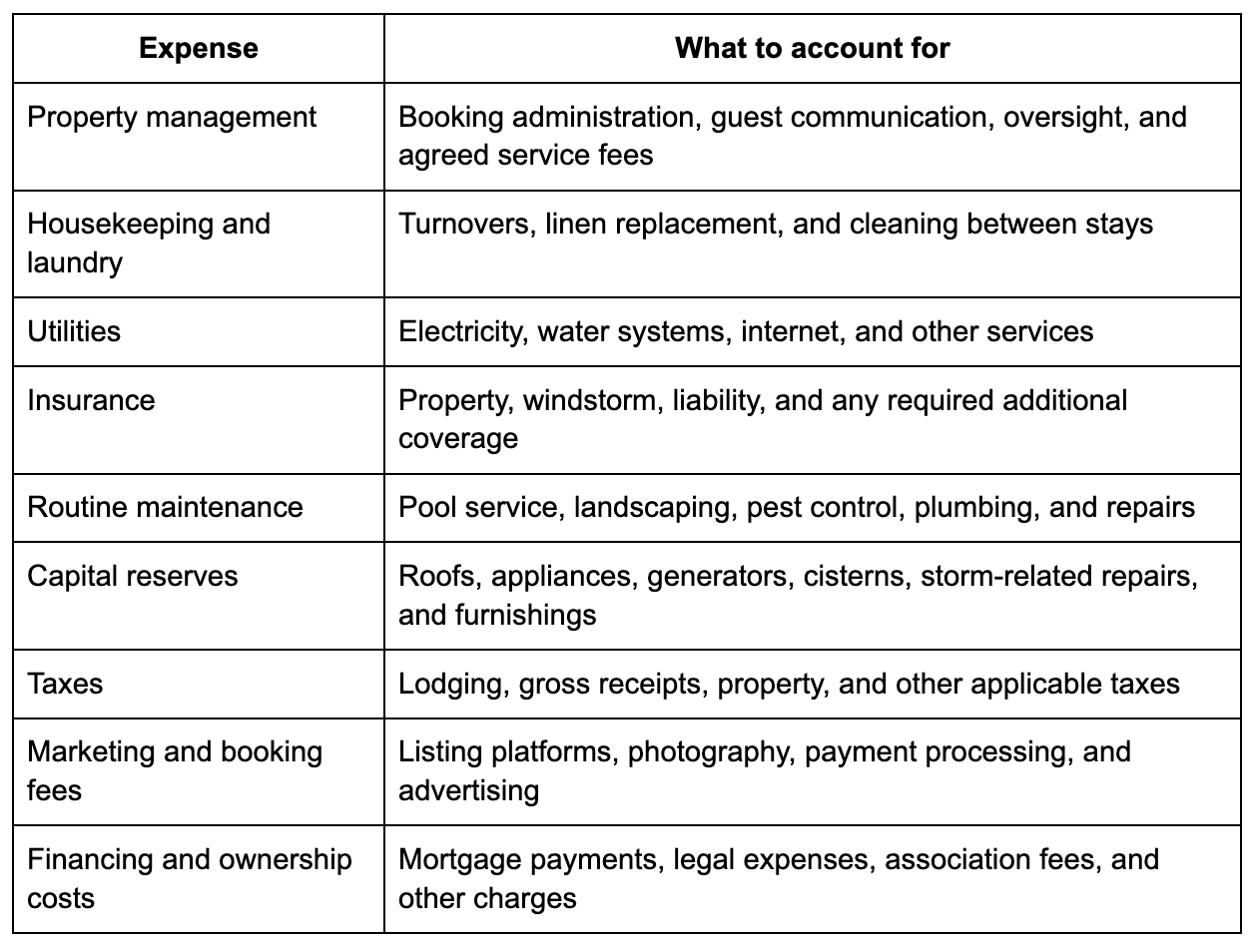
Guests paying premium rates expect dependable systems and prompt help when something breaks, so don’t underestimate the cost of keeping a luxury home in top condition.
The metric that matters is not gross revenue but income remaining after operating expenses and reserves. If you’re financing the purchase, include debt service in the analysis.
Maximize Rental Performance Through Professional Management
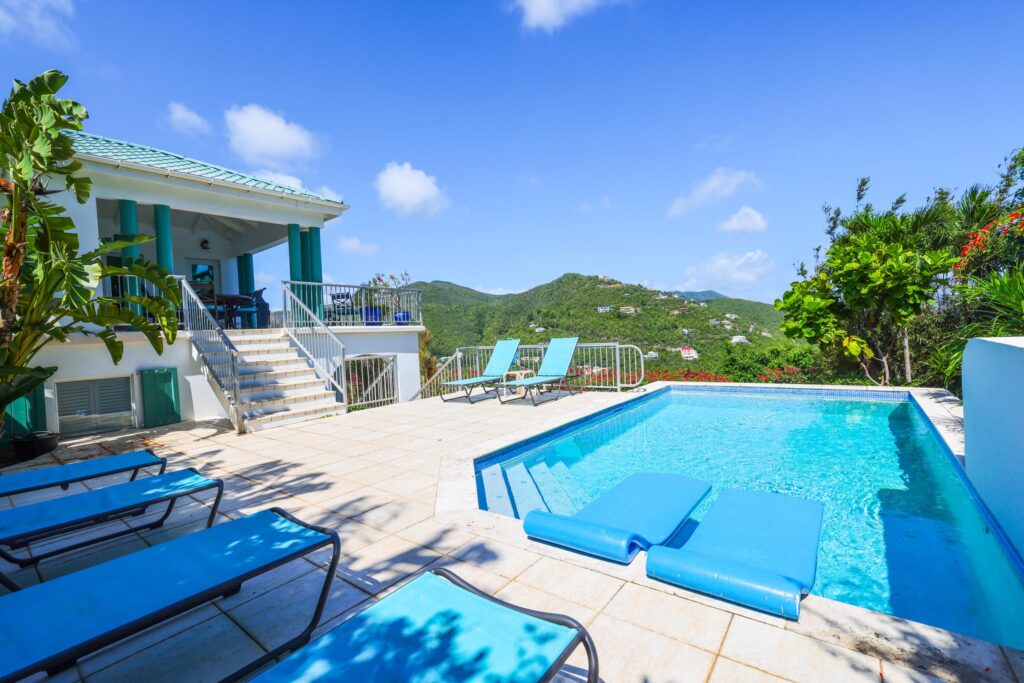
A successful vacation rental runs like a hospitality business. The property is the asset, but day-to-day management largely determines how it performs. For owners who live off-island or split time between residences, a dependable local team is especially valuable.
Choosing a Property Manager
A qualified manager coordinates reservations, guest communication, housekeeping, maintenance, inspections, and emergency response, and may advise on pricing and vendors. Before you sign, ask:
What does the management fee include?
How are maintenance expenses approved and documented?
Who handles emergencies after hours?
How are rates adjusted for demand and booking gaps?
Can you see verifiable performance data for comparable homes?
What reporting will you receive, and how often?
Are there restrictions on owner stays or required vendors?
Compare the total cost of each arrangement, not just the headline percentage. A lower fee is no bargain if communication, maintenance oversight, or guest service is inconsistent.
Price According to Demand
December through April is generally the principal high season, while other months bring different opportunities and challenges. Build a pricing strategy around holidays, local events, booking lead times, and remaining availability, and review rates regularly rather than setting them once for the year.
The goal isn’t the highest possible rate on every booking. Overpricing leaves valuable nights empty; indiscriminate discounting erodes revenue. Balance rate, occupancy, booking conditions, and the cost of each stay.
Invest in the Guest Experience
Strong reviews come from consistent execution: a smooth arrival, an accurate listing, responsive local support, comfortable bedding, reliable internet, and meticulous housekeeping. Professional photography and a well-written listing should showcase the home’s real strengths, whether that’s a panoramic sunset, a private pool, or easy access to Cruz Bay.
Before undertaking a major renovation, consider lower-cost upgrades such as replacing tired furnishings, improving lighting, upgrading Wi-Fi, or refreshing outdoor seating. They often do more for booking performance than expensive additions.
Make Personal Use Part of the Strategy
Every night you reserve for yourself is a night a paying guest can’t book. Decide early how much time you expect to spend at the property and build those dates into your projections.
Some buyers want to maximize rental income. Others prefer to offset part of the ownership cost while keeping the home for family holidays and extended stays. Either is valid, as long as you recognize the trade-off before you buy. A home that supports your lifestyle and meets your financial expectations may be a better fit than one with higher projected revenue but little room for personal use.
Protect Your Investment Against Island-Specific Risks
Tropical Weather
St. John is exposed to hurricane risk, so resilience should shape both property selection and ownership. Review construction type, roof condition, storm protection, drainage, windows and doors, and retaining walls where applicable. Ask about backup power, water storage, and how quickly replacement equipment can be obtained.
Get insurance quotes before you finalize the purchase. Coverage terms, exclusions, deductibles, and premiums can materially affect viability. Don’t assume a policy covering the structure also covers furnishings, lost rental income, or every type of storm damage. Keep a dedicated reserve for urgent repairs so you aren’t relying on rental income immediately after a disruption.
Maintenance and Island Logistics
Salt air, humidity, tropical vegetation, and heavy use accelerate wear on building components and outdoor furnishings, and imported materials take longer to arrive than on the mainland. Request maintenance records, utility bills, insurance history, and details of significant repairs, and have key systems inspected by professionals familiar with island construction.
If you’re considering land or a property needing substantial renovation, evaluate access, drainage, water storage, wastewater systems, permitting, construction logistics, and realistic timelines before committing.
A home that’s straightforward to maintain can be a better investment than a larger, more elaborate property whose operating complexity consumes its return.

Understand Vacation Rental Regulations and Taxes in the USVI
Before buying for short-term rental use, confirm the activity is permitted and that you understand every licensing and tax obligation. Requirements depend on the property, rental arrangement, business structure, and current rules. Your due diligence should cover:
Business licensing: Confirm Department of Licensing and Consumer Affairs requirements for the rental operation. A previous owner’s license does not automatically transfer to you.
Hotel room occupancy tax: A 12.5% tax applies to qualifying short-term accommodation. Confirm the current rate, taxable charges, filing requirements, and remittance responsibility with the V.I. Bureau of Internal Revenue.
Gross receipts and income taxes: Rental activity may trigger additional obligations. Review the treatment of expenses, ownership entities, and filing thresholds with a tax professional familiar with USVI rules.
Property and transfer taxes: Establish the assessed value, property tax, and transfer stamp tax before calculating acquisition and carrying costs.
Condominium and community restrictions: Review association documents, rental restrictions, minimum-stay rules, and approval procedures before assuming a property can operate as a vacation rental.
Insurance and liability: Confirm your coverage is appropriate for short-term rental use and addresses liability risks.
Because rules change, get current guidance from the relevant territorial authorities, a USVI-licensed attorney, and a qualified local tax adviser before you operate the property.
A Practical Checklist for Buying an Investment Property on St. John
- Define your objective. Maximize income, offset costs, preserve value, enjoy a retreat, or a combination.
– Study comparables. Request actual booking history, achieved rates, occupancy, and operating expenses for genuinely comparable homes.
– Build conservative projections. Test several revenue scenarios and include management, insurance, utilities, taxes, repairs, reserves, and financing.
– Inspect thoroughly. Review the roof, structure, water systems, electrical, drainage, appliances, and storm preparedness.
– Verify rental eligibility. Confirm licensing, association rules, zoning and permitting, and tax obligations before counting on rental income.
– Get insurance quotes early. Understand premiums, deductibles, exclusions, and availability before finalizing your budget.
– Interview property managers. Compare services, fees, communication standards, and evidence of performance.
– Plan your personal use. Block out your dates and reflect the lost rental nights.
– Establish a capital reserve. Keep funds ready for repairs, storm recovery, and major replacements.
– Assemble a local team. Work with an experienced real estate professional, a USVI-licensed attorney, an accountant, and qualified inspectors.
The strongest investment decisions rest on evidence, not assumptions.
Frequently Asked Questions About Investing in St. John Vacation Homes
Is buying a vacation home on St. John a good investment?
It can be, particularly for buyers who value the island’s limited land supply, established visitor market, and lifestyle appeal. Performance depends on purchase price, rental demand, operating costs, financing, property condition, and your own use. Neither appreciation nor positive cash flow is guaranteed.
How much rental income can a St. John vacation home generate?
It varies widely by location, bedroom count, amenities, condition, season, and management. Use actual revenue records from comparable properties rather than advertised rates, and calculate net operating income before drawing conclusions about profitability.
What expenses should buyers expect?
Common costs include insurance, utilities, property management, housekeeping, maintenance, landscaping, pool service, taxes, booking fees, and capital reserves. Shipping and contractor logistics can raise the cost of repairs and improvements.
Can I use my home while renting it to guests?
Yes, provided your rental arrangement and any applicable rules allow it. Many owners reserve selected weeks for themselves and rent the rest. Include personal-use nights in your projections, since they reduce the nights available to paying guests.
Do I need a property manager?
Not necessarily, but professional local management is especially valuable for off-island owners. Weigh its cost against the time, local presence, and operational support you’d need to manage the home yourself.
What should I verify before buying for short-term rental use?
Confirm rental eligibility, licensing, taxes, association restrictions, insurance availability, maintenance history, and actual rental performance. A local attorney and tax professional can identify the requirements specific to the property.
Turn Your St. John Property Search Into a Well-Informed Investment
A vacation home on St. John offers something increasingly rare: a private Caribbean retreat that can help cover its own ownership costs. Realizing that potential takes a clear strategy, careful analysis, and a realistic view of island ownership.
The best property isn’t necessarily the one with the highest advertised rate or the longest amenity list. It’s the one whose location, condition, operating costs, rental appeal, and personal-use potential fit your long-term goals.
At Tropical Properties VI, we help buyers explore St. John real estate with an understanding of both the lifestyle and the practicalities of ownership, whether you’re considering a private villa, a condominium, or a second home with rental potential.
Ready to explore investment properties on St. John, USVI? Connect with our team to discuss your goals, compare available properties, and identify homes that fit your vision of Caribbean ownership.

The information on this website is provided exclusively for consumers' personal, non-commercial use and may not be used for any purpose other than to identify prospective properties consumers may be interested in purchasing. Equal Housing Opportunity: All real estate advertised herein is subject to the Fair Housing Act of 1968.
POPULAR SEARCHES
Island Sky Condos Waterfront Properties New Listings Luxury Listings Commercial Properties Condos for Sale St. John, USVI Sitemap Rendezvous & Ditleff Point The Hills Condominiums Virgin Grand EstatesST. JOHN AREAS
Peter Bay Cruz Bay Coral Bay Chocolate Hole The Hills Condominiums Ditleff Point Virgin Grand Estates Fish Bay and Reef Bay Rendezvous & Ditleff Point Catherineberg St. JohnThe Marketplace
St. John, VI 00830
O: 340.776.6776 F: 340.774.8042
List Your Property | About Our Company | Our Agents | Explore | Blog | Contact Us
© 2026 Holiday Homes of St. John, LLC, All Rights Reserved. Powered by Neutrino, Inc.Privacy Policy
Terms and Conditions
Sign In
Sign in with Facebook Sign in with GoogleCreate an account
Create an Account
Sign up with Facebook Sign up with GoogleAlready have an account? Sign in.
By joining you agree to our Terms of Use and Privacy Policy
International Partners